
ADA & Braille Signs: Compliance Requirements for Business Owners
SignHop helps you get free quotes from vetted sign shops in your area.
ADA-compliant signage isn't optional—it's a federal requirement that protects your business from lawsuits and fines.
According to the Department of Justice, approximately 73% of ADA lawsuits involve businesses that failed to meet basic accessibility standards, including proper signage. The Americans with Disabilities Act mandates specific requirements for tactile characters, Braille translations, mounting heights, and color contrast to ensure people with visual impairments can navigate your facility independently.
Understanding these requirements saves you from penalties ranging from $55,000 for first violations to $150,000 for repeat offenses. SignHop.com connects you with vetted sign shops that specialize in ADA-compliant signage, ensuring your business meets all federal standards from the start.
What Signs Require ADA Compliance?
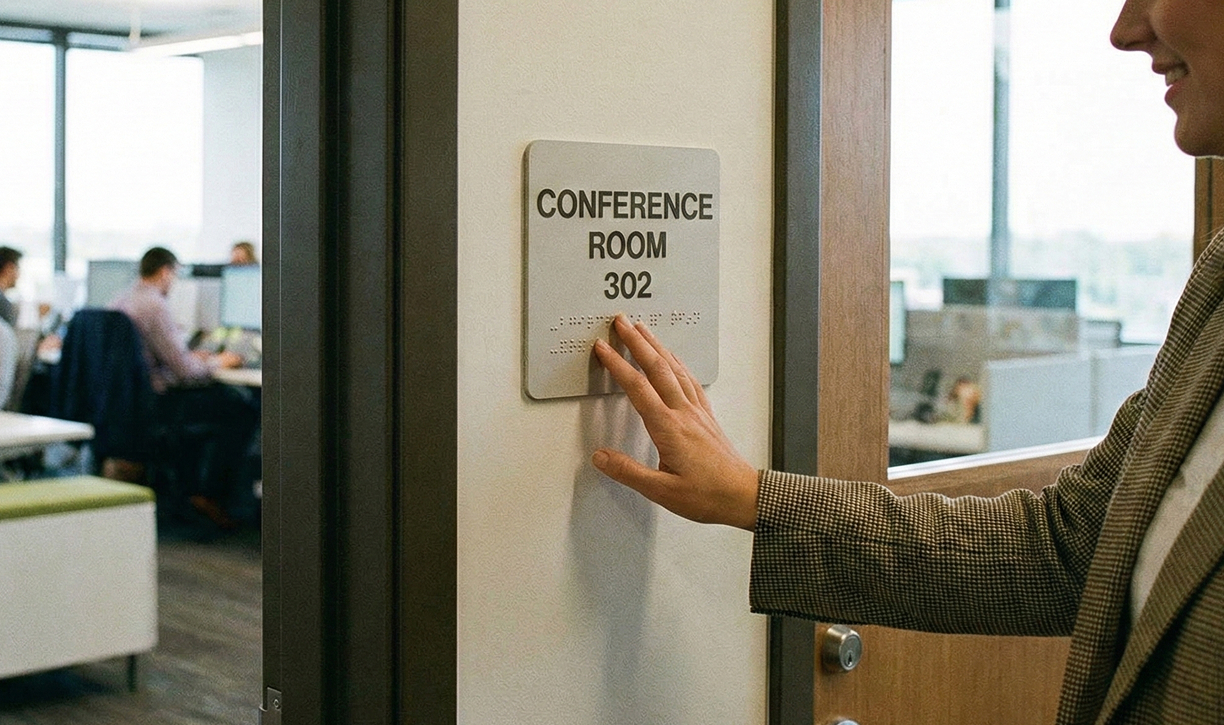
Not every sign in your building needs Braille or tactile lettering. Permanent room identification signs—like restroom markers, room numbers, and exit signs—must meet ADA standards. These signs identify spaces where functions don't change, such as conference rooms, offices, and storage areas.
Temporary signs, directional signage, and company logos are exempt from tactile requirements. However, they must still meet color contrast standards if they provide wayfinding information. Building directories and elevator indicators have separate requirements under ADA guidelines.
ADA Signage Technical Requirements Explained
Compliant signs must feature raised characters between 5/8" and 2" high, with a stroke width-to-height ratio between 1:5 and 1:10. Grade 2 Braille must appear directly below corresponding text, positioned 3/8" minimum from other elements. Finish and contrast matter—characters require a non-glare matte or eggshell finish with 70% contrast between text and background.
Mounting height is strictly regulated: signs must be installed 48" minimum and 60" maximum from the floor to the baseline of the lowest tactile character. Wall-mounted signs require 18" clear floor space and cannot protrude more than 4" into circulation paths when mounted below 80" from the floor.
Common ADA Compliance Mistakes to Avoid
The most frequent violation involves incorrect Braille translation or placement. Many businesses purchase "ADA-style" signs online that feature decorative Braille rather than accurate Grade 2 translations. This creates liability even though signs appear compliant.
Incorrect mounting heights account for 40% of ADA signage violations during facility inspections. Installing signs on doors rather than adjacent walls, using glossy finishes that create glare, or choosing insufficient color contrast all trigger violations. Professional sign shops understand these nuances and install compliant signage correctly the first time, as detailed in our guide on how to choose the best sign company for your business in 2025.
Beyond Compliance: Enhanced Accessibility Signage
While meeting minimum ADA requirements protects your business legally, enhanced accessibility features improve customer experience. Pictograms with corresponding text help all visitors navigate more easily. Large-print directories, high-contrast wayfinding, and multilingual signage create welcoming environments for diverse customers.
According to accessibility research, 15% of the global population experiences some form of disability. Businesses that exceed minimum compliance standards see measurable increases in customer satisfaction and loyalty. These enhancements demonstrate your commitment to serving all customers equally.
Working with ADA Signage Specialists
Professional sign companies certified in ADA compliance understand current regulations and proper installation techniques. They verify Braille accuracy, calculate correct mounting heights for your specific facility, and recommend appropriate materials for indoor versus outdoor applications. Vetted specialists also stay updated on regulation changes and state-specific requirements.
Quality ADA signs manufactured from durable materials like photopolymer or acrylic with precision engraving last 10-15 years in commercial environments. Professional installation ensures compliance survives building inspections and protects against disability discrimination lawsuits. For businesses in South Florida, our article on essential permitting facts for business signage covers local requirements.
Get ADA-Compliant Signage Right the First Time
Protecting your business from ADA violations requires working with experienced sign professionals who understand federal accessibility standards. Don't risk costly fines or lawsuits with non-compliant signage. Get started with SignHop.com to connect with vetted sign shops specializing in ADA and Braille signage—find qualified local experts who ensure your facility meets all accessibility requirements while creating professional, welcoming spaces for every customer.
SignHop helps you get free quotes from vetted sign shops in your area.