
Outdoor Signage Permits: What Business Owners Need to Know
SignHop helps you get free quotes from vetted sign shops in your area.
Getting outdoor signage permits doesn't have to be complicated if you know the basics.
Most cities require permits for outdoor business signs, with requirements varying by sign type, size, and location. Understanding your local regulations before installation prevents costly delays and fines.
Smart business owners work with experienced sign shops that handle permitting as part of the installation process. SignHop.com connects you with vetted professionals who know local permit requirements and can navigate the approval process efficiently.
Do You Need a Permit for Your Outdoor Sign?
The short answer: probably yes. Most municipalities require permits for permanent outdoor signage, including wall signs, pole signs, monument signs, and illuminated displays. Temporary signs like banners often have different rules, with some cities allowing 30-60 days without permits.
Common signs that require permits include channel letters, cabinet signs, freestanding structures, and any illuminated signage. Window graphics and door decals typically don't require permits, making them popular choices for businesses seeking quick, hassle-free branding. Learn more about permit-free options in our guide to window vinyl graphics and lettering.
Permit requirements depend on sign size, height, setback from property lines, and illumination type. Cities like Boynton Beach have specific regulations that business owners must follow.
What Information Do Permit Applications Require?
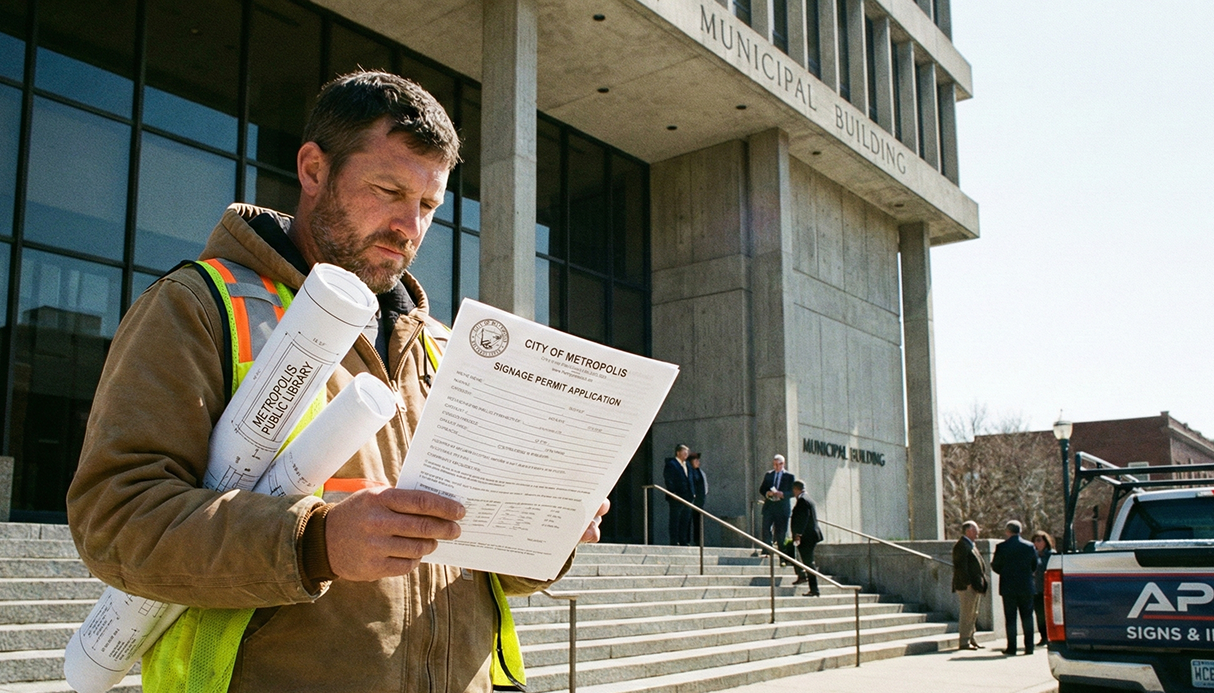
Expect to provide detailed specifications about your proposed signage. Applications typically require site plans showing sign placement, engineering drawings for structural signs, electrical plans for illuminated signs, and proof of property ownership or landlord approval.
Sign dimensions, materials, colors, and mounting methods must be clearly documented. For freestanding signs, you'll need foundation details and wind load calculations. According to industry data, 73% of permit delays result from incomplete applications, so thoroughness matters.
Professional sign companies handle this documentation as standard practice. When you work with vetted shops through SignHop, they prepare complete permit packages that meet local requirements, reducing approval time from weeks to days.
How Much Do Sign Permits Cost?
Permit fees vary significantly by location and sign type. Small wall signs might cost $50-150 in permit fees, while large monument signs can run $500-1,000 or more. Illuminated signs often carry higher fees due to electrical inspections.
Palm Beach County municipalities charge based on sign square footage and complexity. Some cities charge flat fees, others use sliding scales. Budget 2-5% of total sign costs for permitting when planning your project. The Delray Beach historic district has additional review processes that can affect both costs and timelines.
Experienced sign shops include permit costs in their quotes, providing transparent pricing upfront. This prevents surprises and helps you budget accurately for your complete signage project.
How Long Does the Permit Process Take?
Standard permit approvals typically take 2-4 weeks once a complete application is submitted. Historic districts or special zoning areas may require 4-8 weeks for design review boards to meet and approve plans.
Rush processing is sometimes available for additional fees, reducing timelines to 5-10 business days. However, incomplete applications reset the clock, which is why working with professionals who get it right the first time saves the most time overall.
Plan your signage project with permit timelines in mind. Order custom signs through SignHop's online marketplace knowing that vetted shops factor permitting into project schedules, providing realistic installation dates.
What Happens If You Skip Permits?
Installing signs without proper permits risks daily fines ranging from $100-500 until compliance is achieved. Cities can order immediate sign removal, and you'll still need to pay for proper permits after the fact.
Beyond fines, unpermitted signs may void your business insurance if accidents occur. Property landlords can also require removal of non-compliant signage, leaving you with worthless materials and lost investment.
The smart approach: work with vetted sign shops that handle permitting properly from the start. It costs less and delivers faster results than trying to fix permit problems after installation.
The SignHop Advantage for Permitted Signage
SignHop connects business owners with experienced sign shops that know local permit requirements inside and out. Our vetted partners handle applications, communicate with city officials, and ensure compliance with all regulations.
You get transparent pricing that includes permit costs, realistic timelines that account for approval processes, and professional installation that passes inspections the first time. No surprises, no delays, no compliance headaches.
Ready to get professional outdoor signage installed properly? Submit your project details to receive quotes from vetted sign shops that handle permitting as part of their complete service. Get started with SignHop.com today and transform your storefront with confidence.
SignHop helps you get free quotes from vetted sign shops in your area.