
Common Mistakes to Avoid When Buying Custom Signs
SignHop helps you get free quotes from vetted sign shops in your area.
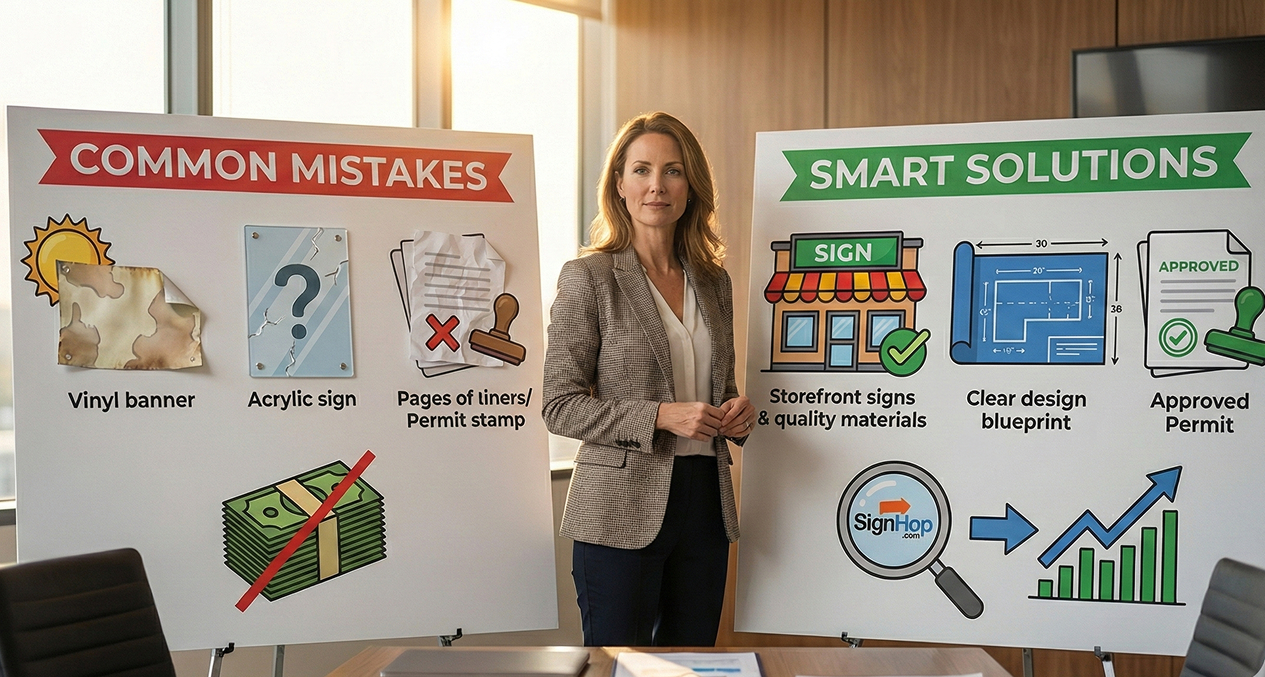
Buying custom signs for your business should be straightforward, but many owners make expensive mistakes that cost them time and money. Poor material choices, unclear design briefs, and skipping the permit process lead to signs that fade quickly, miss the mark visually, or violate local regulations. Understanding these common pitfalls before you order can save you thousands of dollars and ensure your signage investment delivers results. SignHop.com connects you with vetted sign shops who guide you through the process correctly from day one.
Choosing Price Over Quality Materials
The cheapest option rarely delivers long-term value. Budget vinyl fades within 18 months under Florida sun, while premium cast vinyl lasts 5-7 years with proper care. Thin acrylic cracks easily, and low-grade aluminum corrodes in humid coastal environments. According to industry data, 64% of businesses that choose economy materials replace their signs within three years, spending more overall than if they'd invested in quality upfront.
Quality materials matter even more in South Florida's harsh climate. Hurricane-resistant signage requires specific construction methods and materials that withstand 140+ mph winds. Premium materials also maintain their appearance longer, protecting your brand image and eliminating frequent replacement costs.
Skipping the Permit Research
Many business owners order signs without checking local regulations, leading to expensive reinstallations or fines. Delray Beach's historic districts have specific size and style requirements, while Boynton Beach enforces strict height limits near residential zones. Permit requirements vary significantly by location and sign type, and ignorance doesn't excuse violations.
Professional sign shops know these regulations and factor them into design recommendations. They handle permit applications, ensuring your sign meets code before production begins. This expertise prevents the frustration of removing a newly installed sign because it violates setback requirements or exceeds allowable square footage.
Providing Unclear Design Direction
Vague instructions like "make it pop" or "something modern" waste everyone's time. Professional designers need specific details: your exact brand colors (Pantone or hex codes), preferred fonts, must-have elements, and examples of styles you like. Without clear direction, you'll go through multiple revision rounds, delaying your project by weeks.
Create a simple design brief before contacting sign companies. Include your logo files in vector format, specific dimensions, and 2-3 reference images showing the style you want. Effective window graphics start with clear communication, not guesswork.
Ignoring Installation Requirements
Signs need proper installation to last. Window graphics require specific surface preparation and application techniques to avoid bubbles and peeling. Dimensional letters need correctly sized mounting studs and weatherproof backing. DIY installation of complex signs often results in crooked letters, visible seams, or premature failure. Professional installation costs more upfront but prevents expensive do-overs.
Consider installation logistics during the design phase. Building height, access restrictions, and power requirements affect what's feasible. Full-color window graphics installation typically takes several hours and requires proper tools and experience for a clean result.
Overlooking Local Business Context
Generic designs don't resonate with local customers. Atlantic Avenue in Delray Beach attracts tourists seeking art and culture, while Federal Highway in Boynton Beach serves practical retail needs. Your sign should reflect your specific location's character and customer expectations. Location-specific design considerations make the difference between signs that blend in and signs that convert.
Your sign competes with neighboring businesses for attention. Study what works (and doesn't) in your immediate area before finalizing designs. What stands out on a quiet side street won't work on a busy commercial corridor.
Choosing the Wrong Sign Type
Not every business needs illuminated channel letters or full window wraps. A boutique might need elegant window lettering, while a quick-service restaurant benefits from bright LED-lit signs. Mismatching sign type to business needs wastes money and fails to attract your target customers.
Consider your operating hours, visibility requirements, and customer demographics. Different sign types serve different purposes—choose based on your specific goals, not just what looks impressive.
Making Smarter Sign Investments
Avoiding these mistakes starts with working with experienced professionals who understand both signage and your local market. Quality materials, proper permits, clear communication, professional installation, and appropriate sign selection ensure your investment pays off. SignHop.com vets every sign shop in our marketplace, connecting you with experts who deliver professional results without the common pitfalls that plague sign projects.
SignHop helps you get free quotes from vetted sign shops in your area.