
Monument Signs or Pylon Signs? Cost, Visibility, and Zoning
SignHop helps you get free quotes from vetted sign shops in your area.
Still scratching your head over monument vs. pylon signs?
You are not alone.
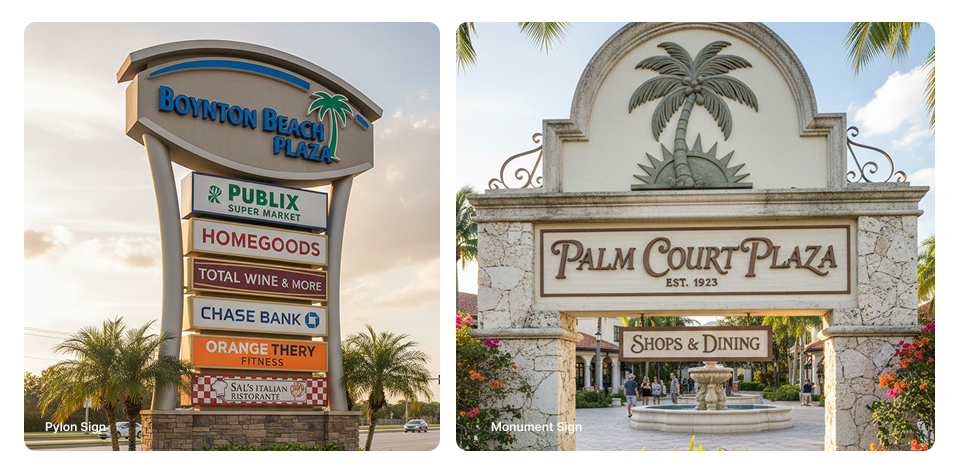
A monument sign sits low to the ground, usually built on a solid base like brick, stone, or concrete. Think bank signs, hospital markers, and hotel entrances. These signs typically range from 4 to 12 feet tall and feel permanent, anchored to your property.
A pylon sign stands tall on one or two poles, rising 15 to 30 feet in the air. These are the signs you see from the highway, marking strip malls, gas stations, and auto dealerships. They are designed to grab attention from a distance and from multiple directions.
The core difference comes down to height and footprint. Monument signs claim ground space. Pylon signs claim skyline space.
Breaking Down the Costs
Here is the honest reality: monument signs generally run between $2,500 and $8,000 installed. Pylon signs land between $4,000 and $15,000, depending on height, materials, and whether you need a single-sided or double-sided display.
But the purchase price only tells part of the story. Monument signs usually require less structural support and smaller foundations, which keeps installation simpler. Pylon signs need deeper footings, taller poles, and sometimes engineering certifications that add $500 to $2,000 to the project. The materials you choose also affect long-term costs. Our breakdown of exterior signage materials shows what lasts longest in tough weather.
If your budget is tight and you own your building, a monument sign makes more sense. If you are in a retail center with shared signage, the landlord may already have pylon infrastructure in place, and you might split costs with other tenants.
Visibility and Placement
Visibility is where pylon signs dominate. A 25-foot pylon sign can be seen from 500 feet away on a clear road. That matters if your business sits back from the street, shares a parking lot with other stores, or relies on drive-by traffic.
Monument signs work best when customers are already turning into your property. A hospital, a hotel, a law office—these businesses need clear identification once you arrive, not a mile down the road. If your building sits close to the road and has good street-level exposure, a monument sign can do the job at half the cost.
Ask yourself: where are my customers coming from? If they find you on Google Maps and then need to confirm they have the right place, a monument sign confirms arrival. If they have never heard of you and need to spot you while driving 40 miles per hour, you need height.
The Zoning Factor
This is the part most articles skip, and it is where many business owners get burned.
Zoning codes restrict sign height, size, and placement in almost every municipality. A pylon sign often requires a variance if you are in a commercial zone with a 20-foot height limit. Some cities ban pylon signs entirely in certain districts. Others allow them only for shopping centers with five or more tenants.
Monument signs tend to face fewer restrictions because they are shorter and grounded. Many zoning codes treat them more like landscaping than signage, which means smaller setbacks and simpler approval processes.
Before you spend a dollar on either option, check your local sign code or talk to a sign company that knows the area. Most cities require permits for both types, and the rules vary wildly. Our guide to outdoor signage permits covers what to expect. Showing up to install a pylon sign only to get a stop-work order is a waste of money and time.
Which One Makes Sense for You
Choose a pylon sign if your business depends on highway or heavy street visibility, if you are in a multi-tenant commercial center, or if your property sits far back from the road.
Choose a monument sign if you are on a prominent corner with good street access, if you want a more polished and permanent look, or if your budget does not allow for a tall structure.
Many businesses use both—a monument sign at the entrance and a pylon sign at the road. That is the ideal scenario if you can afford it. But if you have to pick one, the decision starts with where your customers are coming from and what the city will actually let you build.
Ready to figure out what works for your location? Head to SignHop.com to explore your options, get a quote, and find out what your zoning allows before you commit.
SignHop helps you get free quotes from vetted sign shops in your area.